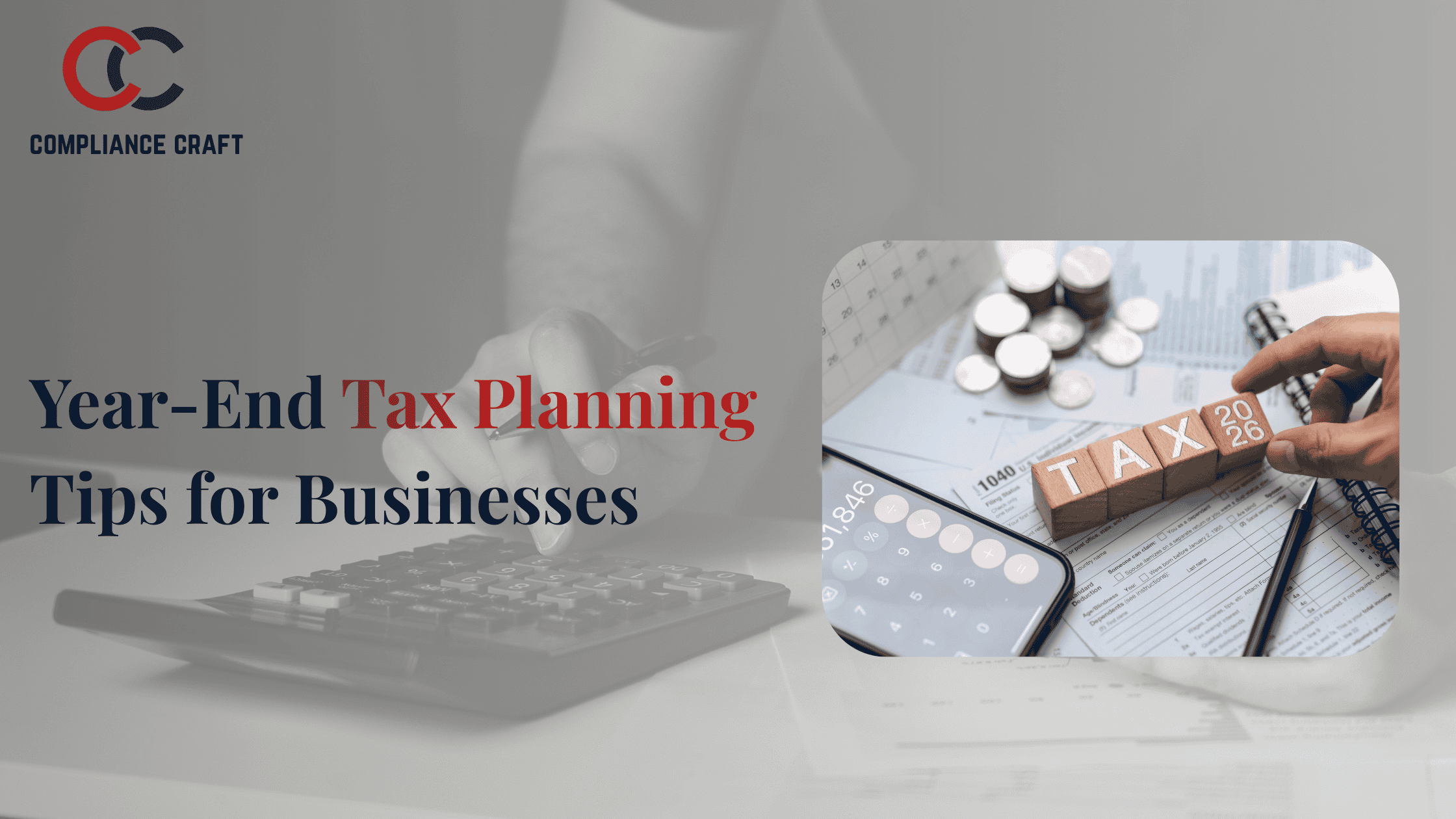
Year-End Tax Planning Tips for Businesses

As the financial year closes, businesses that delay tax planning often overpay. Smart companies use year end tax planning for businesses to legally reduce liability, strengthen compliance, and improve cash flow.
Working with experienced tax and compliance experts ensures that year-end decisions are strategic — not rushed. Businesses searching for the Best CA in Pune increasingly rely on structured advisory from Compliance Craft Advisors Private Limited, a trusted tax & regulatory advisory firm.
Why Year-End Tax Planning Is Critical
Year-end planning is not about last-minute adjustments. It is about reviewing the entire year’s financial position and applying legal corporate tax planning strategies.
Professional business compliance consultants help companies:
Reduce excess tax payments
Claim eligible deductions
Optimize depreciation
Close compliance gaps
Prepare audit-ready records
This process is a core part of professional compliance management services. It also includes reviewing risks such as the top GST filing mistakes small businesses should avoid and correcting reporting gaps before financial closure.
Practical Year-End Tax Saving Strategies
Businesses should focus on the following tax saving tips before financial year end:
GST verification should include proper reconciliation and correct input tax credit (ITC) claims, along with compliance checks related to e-invoicing under GST.
Income tax planning should also consider avoiding the common mistakes people make while filing ITR and evaluating the difference between old and new tax regime for optimized decision-making.
These steps form a structured business tax deductions checklist and support strong year end tax compliance for businesses.
Tax Planning for Small Businesses vs Corporates
While fundamentals remain the same, tax planning for small businesses focuses more on cash flow and expense timing. Larger companies emphasize long-term corporate compliance solutions and strategic structuring.
A qualified compliance advisory firm ensures that both SMEs and corporates apply tailored strategies instead of generic advice. Strategic planning may also include reviewing legitimate investment avenues, similar to evaluating the best tax-saving investments for salaried employees in India 2026 principles for tax efficiency.
Final Thoughts
Year-end tax planning is a business strategy — not an accounting formality. Companies that apply structured planning gain financial efficiency and regulatory security.
If you want professional tax planning services for businesses, trusted corporate compliance specialists at Compliance Craft Advisors Private Limited provide proactive advisory designed to legally reduce business tax liability.
Call to Action
Don’t wait for March 31 pressure. Plan early.
Schedule a year-end tax review with Compliance Craft Advisors Private Limited
Identify legal tax saving opportunities
Strengthen compliance before closing books
Do contact us at info@compliancecraftadvisors.com for more details or call 9623122037.
FAQ – Year-End Tax Planning
What are the best year-end tax planning strategies for businesses?
Expense optimization, depreciation planning, and compliance checks.How can businesses reduce tax liability before year end?
By legally claiming deductions and adjusting expense timing.What deductions can businesses claim before year end?
Operational expenses, depreciation, employee benefits, and statutory payments.Is year-end planning different for small businesses?
Yes — SMEs focus more on liquidity and expense scheduling.What expenses should businesses book before March 31?
All legitimate operational and statutory costs.How does depreciation help?
It reduces taxable income through asset allocation.What compliance checks are needed?
GST reconciliation, advance tax review, and documentation audit.Can advance tax reduce burden?
Yes — timely payment avoids interest and penalties.What mistakes do businesses make?
Last-minute booking without documentation.
10. When should a business consult a tax advisor?
Ideally 2–3 months before financial year end.